Home - Children’s illnesses & symptoms - Fever (high temperature)
  • Fever
    (high temperature)

    How can you be sure your child has a temperature?

    There can be so many uncertainties when it comes to your baby’s temperature, but we’re here with some practical help for you.

    See our products for fever (high temperature)

What is a normal temperature?

The first thing to say is that a baby’s temperature range can vary quite widely over time.

The part of the brain that controls temperature isn’t fully developed in children. This means their temperature is more likely to go up or down very quickly.

But what is a normal temperature, and how can you tell when your child is definitely unwell?

Like so many things, when it comes to a ‘normal’ temperature, every child is different, but generally any temperature above 37.5°C is classed as a fever.

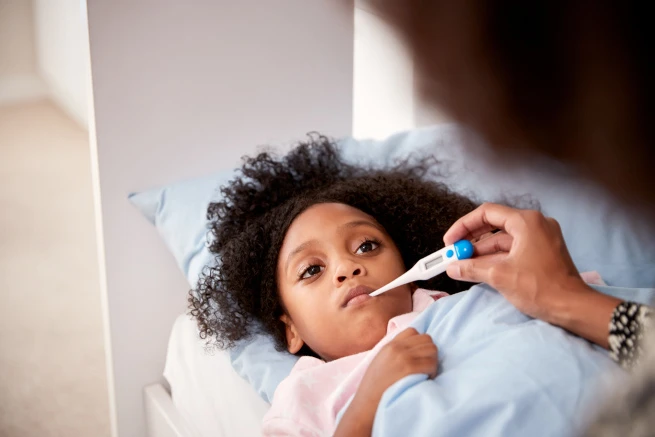
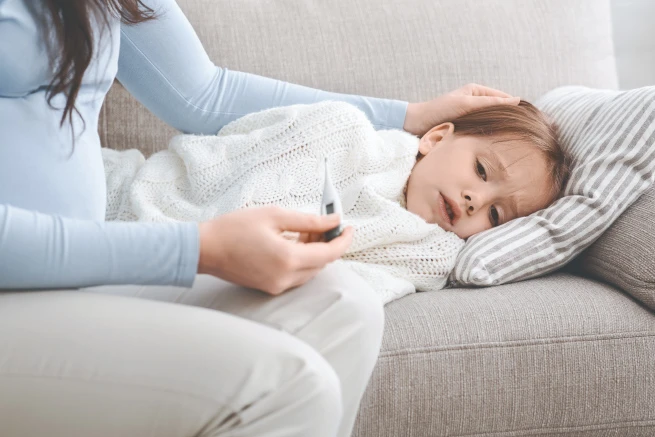
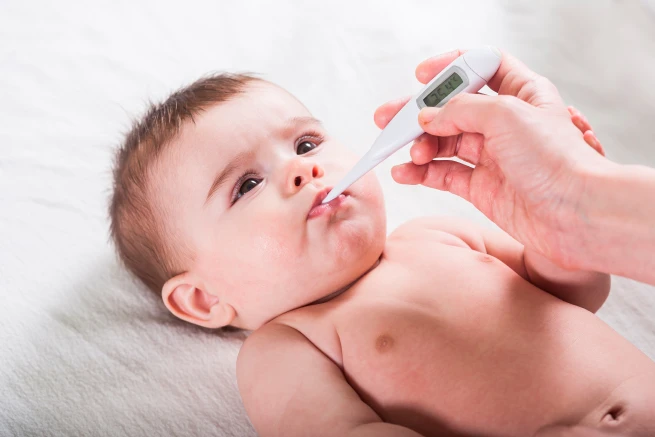
We know it’s not always easy taking a baby’s temperature, so we’ve made a short guide to give you some tips.

See our guide to taking a baby’s temperature

It’s not unusual for children to get a mild fever, but if they have got one, there’s lots of ways you can help them feel better. Which is where we can help.

What causes a high temperature?

A temperature in your child can be caused by the simplest things, even wearing too many layers on a hot day.

But when your little one is suffering from a fever, it can be a sign that their body is fighting an infection.

It might be because they have a common childhood illness such as an ear infection, the cold or flu or they may be suffering from a disease like measles, mumps or chickenpox.

How can I help my child feel better?

There are lots of simple things you can do to help your little one feel more comfortable when they have a fever.

  • Make sure they get plenty of restful sleep.
  • Keep them cool –undress them to their underwear. You can cover them with a cool, light sheet though.
  • Make sure they have plenty to drink. If they have started eating solid food, offer lots of cool drinks, especially water.

If your baby is still uncomfortable, you can treat the symptoms of a fever at home with infant paracetamol or ibuprofen – something we’ve been helping mums and dads do for over 45 years.

For babies over 2 months, weighing over 4kg and not premature, you can use CALPOL® Infant Suspension.

For children 6 years and older, you can use CALPOL® SIXPLUS™ Suspension.

CALPROFEN® Ibuprofen Suspension starts work to relieve fever in just 15 minutes and lasts up to 8 hours. It’s suitable for children over 3 months and weighing over 5kg.

For more help looking after your little one when they have a fever, we’ve asked child health expert Dr. Carol Cooper for her top tips. Watch our short video to find out more.

You need Flash player 8+ and JavaScript enabled to view this video.
Dr Carol Cooper’s involvement in these videos is sponsored by CALPOL® however Dr Carol Cooper does not endorse CALPOL® or the CALPOL® Family of products.

Watch our video on caring for a child with fever

You can also use the handy Fever Diary we’ve created to help keep track of when you’ve given your little one medicine, and when they might need their next dose, if required.

Download the CALPOL® Fever Diary

When should I call the doctor?

You should contact your GP or take your child to the hospital right away if your little one’s temperature is accompanied by any of these symptoms:

  • An unusual rash
  • An abnormal or high-pitched cry
  • A headache
  • A stiff neck
  • Difficulty breathing
  • Pale, blotchy, clammy or mottled skin
  • Your child is unusually sleepy
  • They won’t take any fluids

Please note this list is not exhaustive. You’re the expert on your little one so do trust your instincts and seek additional advice if you’re concerned.

When a child has a high temperature (over 37.5°C), it is possible for them to have a fit. This is known as a ‘febrile seizure’ or convulsion. They are relatively common, and although frightening, the majority of the time are harmless.

If your child is suffering from a febrile seizure, place them in the recovery position. Lay them gently on their side on a soft surface with their face turned to one side. This will ensure their airways stay open and can help to prevent injury. Stay close to your little one and make a note of how long the seizure lasts.

While febrile seizures are normally nothing to worry about, it’s best to be sure. So if you’re concerned - if it is the first time your child has had a seizure, or it lasts over five minutes - then take them to the nearest hospital for further advice.


See also

Treatment advice

"My son has a high temperature, what should I do?"

When your child suffers from a fever, it can be a sign that his body is fighting an infection. We've put together a helpful fact sheet of things to do and what symptoms to look out for.

How to care for an infant with fever

Get the CALPOL® iPhone App

Download it for free